 Mathari
A maths game for schools
Mathari is a South African maths adventure game for Grades 1 to 7, and each teacher gets a free class dashboard.
One answer
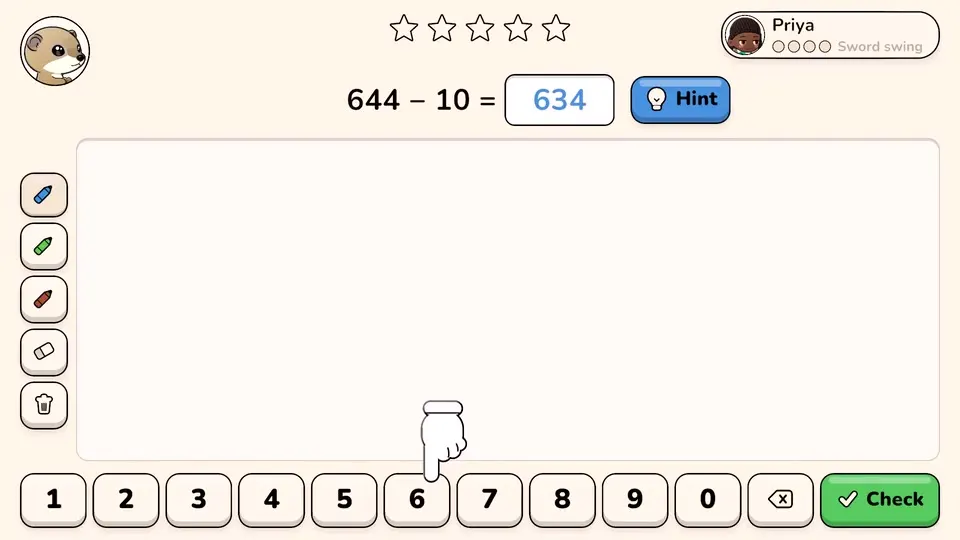
The energy for every attack comes from answering questions from the school’s curriculum: CAPS, IEB or Cambridge.
- The game asks about one question for every four attacks, plus a daily quiz.
- On tablets and PCs a learner can draw the working with colour pens before answering.
One session
A 10-minute school session is designed so about half goes to answering or being taught, and the rest to the battle.
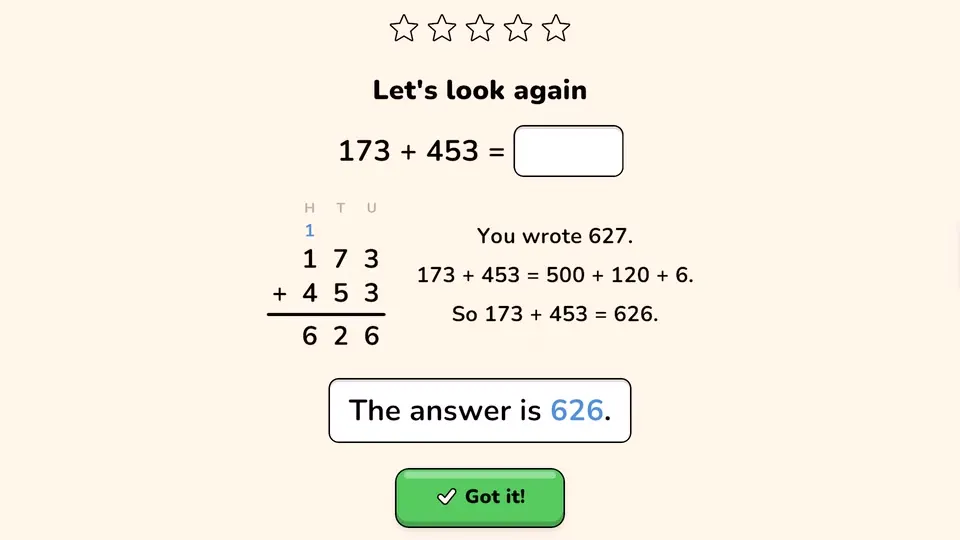
- After a wrong answer the learner sees where the working went wrong and one worked step, then tries a similar question.
- In the January build: the teacher sets the session length, 10 minutes by default, and the session ends by itself. In school mode the time goes to maths, and learners see only their own classmates.
- Research on game-based maths practice links more questions answered at school to higher marks. Read the two studies
One learner
Each name on the teacher’s list leads to that learner’s wrong answers and a reteach note.
- A learner’s page shows the level reached in every skill of the term, and prints as a learner report. Open the sample learner page
Sample dataNaledi is an invented learner in a sample class. The questions and the wrong answers are real ones from the game.
One class
The class page opens on a needs‑help list, grouped by skill, and a group can be printed for small‑group teaching.
- Reports cover monthly progress, per-skill results and usage, with a term report for report cards. Open the sample reports
- In the January build: the teacher assigns practice on chosen skills to the class, a group or one learner. A report shows every wrong answer. Open the sample assignments page
Sample dataMs Naidoo’s Grade 4A is a sample class. Every learner and number in it is invented; the questions and wrong answers are real ones from the game.
Class play
The dashboard also holds what a teacher uses with the whole class, on the projector and in print.
- The class board is a leaderboard for the projector, with the week’s right answers under hero names. Open the sample class board
- A class goal carries a reward for everyone, and a class challenge ends in printable certificates. Open a sample certificate
- In the January build: the whole class frees an animal together in a class quest. Open the sample class quest screen
The whole school
A head of academics opens one page that lists every class, with the week’s play and the learners who need help.
Sample dataRiverveld Primary and its classes are invented. Grade 4A opens into the sample teacher dashboard.
- Each row is one class, with how many of its learners played this week.
- One column counts the learners who need help, in red where that is a fifth of the class or more.
What a school gets
- Learners get a real game with a story, battles and animals to free.
- Teachers get a free class dashboard with each learner’s progress per skill.
- The head of academics sees every class on one page.
- Parents get a dashboard for each child that shows improvement over time.
- The game runs online or offline, on Android phones and tablets and on Windows PCs.
How a class starts
A teacher creates the class on the web dashboard in a few minutes.
- The teacher names the class and chooses its grade and curriculum: CAPS, IEB or Cambridge.
- The dashboard gives a class key. Each learner types it into the game once, and from then on the teacher sees that learner in the class.
- To log in, a learner taps their hero and types a short PIN. Grades 1 to 3 can use a picture password.
- Login cards print from the dashboard, one for each learner.
Each new school year, a new class key moves the learner into the new class with everything they earned.
Sample dataThese cards belong to a sample class. Every name, class key and PIN on them is invented.
Who pays
The child’s account belongs to the parent, who creates it and gets a dashboard for that child.
Mathari is paid per child by the parent. The teacher dashboard is free.
The school pays nothing, and each child’s first month is free. A child joins the class with the teacher’s class key, and the parent still sees everything.
What happens next
A demo shows the opening of the game, a battle with the learning steps, freeing an animal and the dashboards.
-
From the end of November 2026
Demos are available. You can ask about your school’s devices and network there.
Book a demoYour email goes to JQ and is used only to arrange your demo. It does not add you to any list. Privacy notice
-
In the January build
Assignments, class quests and the placement report arrive, school sessions end by themselves, and classmates share a private class world.
-
From Term 1 of 2027
Early access opens. Join the list and we will email you when it does.
Join the early-access listBy sending this email you agree to be emailed when early access opens. You can ask to be taken off the list at any time, and we ask nothing about your child. Privacy notice
JQ makes Mathari. Write to him with any question about the game.
If no email opens, write to jqbotes@gmail.com. Your email goes to JQ and is used only to answer your question. Privacy notice